
Curlew Moon
…Numenius arquata

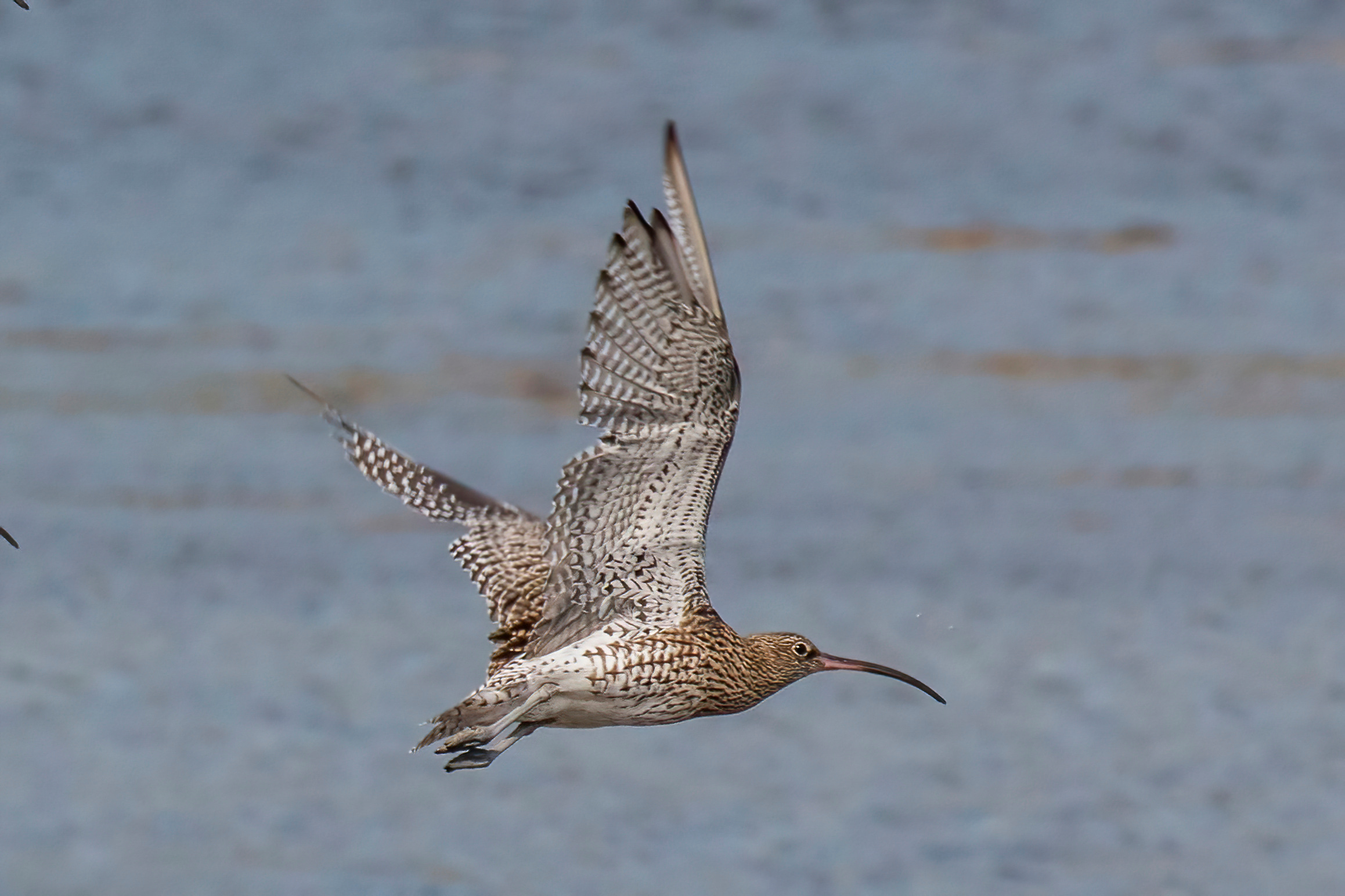
Mark Butler is a sculptor, rooted in Yorkshire, whose practice addresses ecology and sustainability in its concerns, its materials and its methods. You can read more about this side of his work, as well as his many and varied activities, on his website. I am fortunate to be one of twenty-one writers asked to participate in his Endangered project, honouring various species local to the Yorkshire region in danger of extinction, among them White-Clawed Crayfish, Sandbowl Snail, Red Squirrel, European Eel and Daubenton’s Bat.
Working with the writers, Mark is making sculptures to represent some aspect of the species and the text. You can see the pieces he’s already made of several wonderful evocative poems – Nancy Campbell’s Lady’s Slipper Orchid, Rachel Bower’s Caddisfly, Sarah Butler’s Least Minor Moth and Charlotte Oliver’s Northern Brown Argus.
I was invited to tackle the Curlew, such a powerful presence each spring and so thoroughly celebrated and written about, the prospect felt rather daunting. How to say something ‘new’ about this Red Listed bird almost everyone seems to know and love. The process differed from the others in that Mark had already made a sculpture, based on the sound of the curlew’s distinctive call, so I approached the writing with that in mind. Though this was over the dark autumn and winter months when no curlews were to be seen or heard. I listened to lots of recordings, particularly Merlyn Driver’s enchanting Simmerdim: Curlew Sounds, musical collaborations and field recordings, created as an awareness raiser and fundraiser for the RSPB’s Curlew Recovery Programme.
I wrote something that started to look like a sequence I decided to call Curlewing, wanting to turn my meeting with the bird’s calls into a verb, an ongoing process. I suggested we might lift a section out to accompany the sculpture – it needed to be around twelve lines or so to fit in the space. Despite a few glimmers here and there, I wasn’t entirely happy with what I’d made, frustrated by the writing not originating from being outdoors with the curlews in their natural habitat on the fells. It was a disjunction that inadvertently encapsulated the sense of loss and absence we’d feel if we were no longer able to hear the birds’ haunting call in the wild, preserved only in digital recordings.
We agreed to wait until spring when the curlews came back so I could return to my sequence and perhaps write something I felt caught the bird more viscerally. So, one overcast Sunday at the beginning of March, I went up to the edge of the North Pennines and with a birding friend walked out into the hills, entirely tuned to the huge sky and the curlews. Listening and looking intently, we were blessed with a cascade of sightings – single birds and pairs gliding, dancing and swooping over the fields, along the valley, their hypnotic sounds bubbling all around us, and then landing on their long, skinny legs to peck at the grass for grubs. The startling intimacy and aliveness of this encounter in such a still and beautiful place was a wellspring of wonder in the midst of a world at war.
I jotted down some notes in situ and over the next few days wrote charm for the curlew (side-stepping the earlier sequence all together), which you can read and listen to here – and see Mark’s striking sculpture, based on the soundwaves of their call. I hope you find something there to enjoy. All the pieces will be exhibited at venues in Yorkshire in 2027 (details on Mark’s site).
§
In ornithological taxonomy, the Eurasian curlew is called Numenius arquata – Numenius after the New Moon, because of its crescent-shaped bill, and arquata meaning ‘bow-shaped’, again after that notable curve. So, it’s a perfect time to let you know about this important many-limbed, -eyed and -winged, -rooted and -petalled project, while these stunning birds are still to be heard, just as we’re coming up to this month’s New Moon on Friday 17th April. The moment occurs at 12.51 exactly, when the Moon will be 226,297 miles from Earth, a distance we’re maybe more aware of since Artemis travelled there and back again.
Later that afternoon, we’ll be meeting as usual for our Writing into Being Writing Hour 4-5pm BST (17.IV.26) and you’re welcome to join our small flock for some quiet writing time. Here’s the link to connect.
Thank you for reading.
Go well.
L
X
Image: Charles J.Sharp
Lovely poem on the curlew, and the song, "the soft build of pressure, bubbling into surrender". I live near Allendale too, and wake to the sound of curlews, very early sometimes when it's a clear night. Thank you.
Your poem has me streaming tears. Beautiful. Their sound is longing. I used to do my daily early walk in Whitley during lockdown to see if they were mowing the lawns for worms and such on the golf course. Strange and wonderful meetings. And of course in Beadnell, sound of an evening coming on the estuary. Their song is in me.